

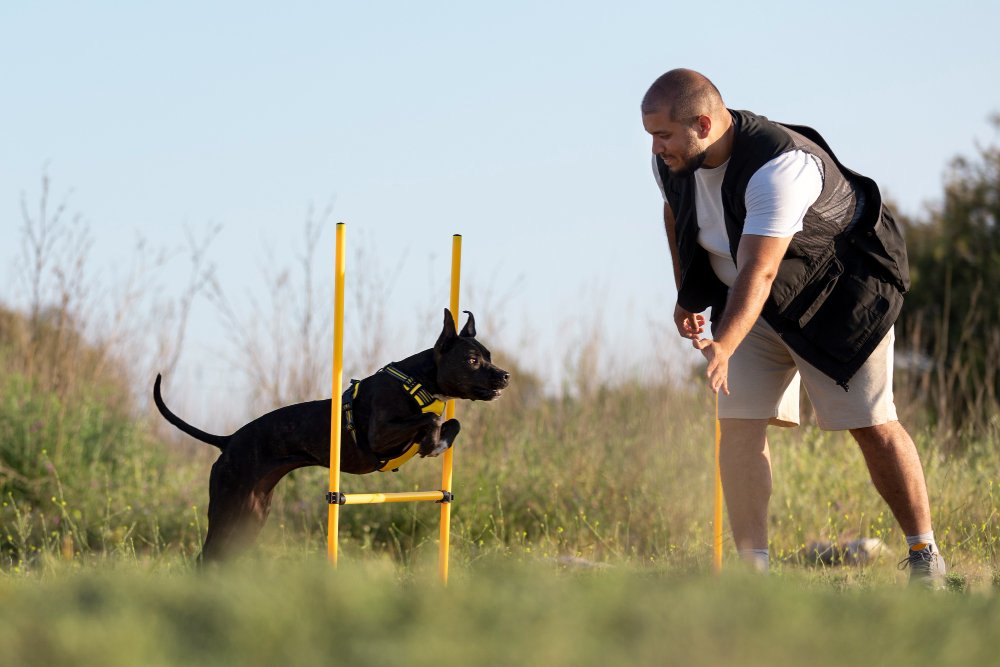
Dog training doesn’t always have to feel like a formal class with strict commands and routines. In fact, some of the best training happens during playtime. Engaging your dog’s mind through everyday games not only makes your bond stronger but also helps your furry friend develop problem-solving skills, impulse control, and focus. Here are five everyday games you can play at home or outdoors that secretly make your dog smarter — and keep training fun.
1. The Treat Treasure Hunt
This game is simple but powerful. Hide a few treats or pieces of kibble around the living room or garden while your dog watches. Then, let them find each one using their nose.
To make it more challenging:
-
Hide treats under small cups, inside boxes, or under a blanket.
-
Use different rooms so your dog must track the scent over a wider area.
-
Add verbal cues like “Find it!” to reinforce the idea.
Why it helps:
The treat treasure hunt engages your dog’s strongest sense: smell. Using their nose to solve problems helps burn mental energy and keeps them calm afterward. It’s a natural way to encourage focus and determination, which carries over to formal training.
2. Which Hand?
Hold a treat in one of your closed fists and present both hands to your dog. Ask, “Which hand?” and let your dog choose by sniffing or pawing. Reward them when they get it right.
To level up:
-
Shuffle your hands around before letting them guess.
-
Add the command “Wait” before they choose, to practice patience.
Why it helps:
This game encourages your dog to use their nose and brain instead of just guessing randomly. It also teaches them self-control and patience, especially if you ask them to wait before choosing.
3. Cup Shuffle
Place three cups upside down in front of your dog and hide a treat under one of them. Shuffle them around while your dog watches. Let them pick the cup hiding the treat.
Start slow:
-
Move the cups gently at first.
-
Increase the speed and number of cups over time.
Why it helps:
Cup shuffle is a classic brain game that teaches dogs to track objects visually, improving concentration and memory skills. It also keeps your dog engaged and curious.
4. Name the Toy
Teaching your dog to recognize toys by name is fun and impressive! Start with two toys and pick one to name, like “Bear.” Say “Get Bear!” and reward your dog when they pick the right toy.
Expand by:
-
Adding more toys with different names.
-
Asking your dog to “Bring Bear” or “Find Ball” from another room.
Why it helps:
Learning words keeps your dog mentally sharp and builds a shared language between you and your pet. Some dogs can learn dozens (even hundreds) of words — and your dog might surprise you!
5. Obstacle Course Adventure
Set up a mini obstacle course in your living room or backyard. Use chairs, cushions, boxes, or broomsticks to create tunnels, jumps, and zig-zag paths. Guide your dog through the course using treats or toys.
For extra challenge:
-
Add commands like “Over,” “Through,” or “Around.”
-
Change the course layout each time to keep it fresh.
Why it helps:
Obstacle courses build confidence and teach dogs to navigate new environments. They also reinforce basic obedience skills and help burn off energy, keeping your dog calm and relaxed afterward.
🐾 Final Thoughts
These everyday games don’t require expensive equipment or lots of space, but they can have a huge impact on your dog’s mental sharpness, confidence, and training progress. Remember, play is learning — and the more your dog enjoys training, the faster they learn.
Incorporate one or two of these games into your daily routine, and watch your dog’s focus, patience, and problem-solving skills grow. Plus, you’ll both have a lot of fun along the way!

